Dulcie Deamer – The Queen of Bohemia

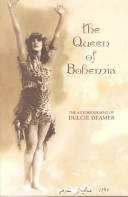
As the old adage goes, you should never judge a book by its cover. Which is exactly what I did when I picked up Dulcie Deamer’s autobiography off a small book stall at last year’s Clunes’ Booktown. I couldn’t help myself, the title suggests excitement and adventure, and the accompanying image had me intrigued. A 1920’s sepia toned image of Deamer, arms spread to the heavens, draped in a leopard skin revealing legs, yes legs – I’d almost forgotten women of that era had legs with the usual sepia photos I’d seen. If the cover wasn’t enough for me then the blurb on the back had me convinced that I had to buy this book:

 “In the wild parties that characterised Sydney’s writing and artisitic community in the Roaring Twenties, Dulcie Deamer was undisputed “Queen of Bohemia”. But there was more to her fascinating life than performing the splits in a leaopard skin.”

Dulcie Deamer’s autobiography explores her life as an artist. Beginning as a child in New Zealand and her early success with a writing completion and continues to the 1960s. The book looks at her writing, her acting career, her early marriage and the international travel that accompanied it, her divorce and then spends several chapters focusing on the 1920s in Kings Cross, Sydney.

Her writing career is admirable and it is enjoyable to read the perspective of a single woman who was able to scrape by with a career in writing. But her bohemian parties and her list of names that are almost catalogued like a who’s who of bohemia left me with questions – where are her 6 children and who is feeding them? Surely they can’t be living in the one room flat she rents. Why is she so reluctant to mention them? From a readers perspective the pages dedicated to her career only widened the chasm between myself and Deamer as I wondered how a woman of that era could function as a single mother with 6 children.

The 1998 publication of the autobiography comes with an introduction by Peter Kirkpatrick and an afterword by Deamer’s daughter Rosemary Goldie. I was thankful for the afterword which explained all of my questions. The children were taken care of by Deamer’s mother, who moved from New Zealand to Sydney to care for her grandchildren. Some of Deamer’s children did not survive childhood, and another died in the first world war. I wish these facts had of been included in the autobiography and not attached as an afterword, although perhaps it says something of the culture of 1920s bohemia. I can understand that her objective was to focus on her career in the autobiography, but I felt that I was investing so much time getting to know and like her friends, that I wanted more.

Her autobiography was a great insight into Sydney of the 1920s. The tone was jovial, making it accessible and an enjoyable read. But Deamer was such an interesting narrator that I couldn’t help but want to learn more about her, and was only satisfied by the afterword written by her daughter.

In all Deamer wrote 7 published novels, 4 plays, published 3 verse poems and had continual work with The Bulletin and the Women’s Mirror. She also left a substantial collection of manuscripts now housed with the Mitchell Library Sydney and the National Library of Australia.

Dulcie Deamer, Queen of Bohemia. University of Queensland Press, 1998.

This review forms part of the Australian Women Writers Challenge.
International Women’s Day Inspiration

Today is International Women’s Day and I’ve been inspired by Whispering Gums to think of texts by women which have inspired me.  I’m busy today, running off to a Ballarat Writers event, which for the last year has had a committee of only women (this AGM we managed to get one male committee member) so my list will be brief.

Kate Jennings: I’ve written about Kate Jennings before. I found her collection of poetry Come to me my Melancholy Baby, when I was about 15 and just learning about poetry. The literature texts at school were very male focused, Shakespeare, Wordsworth etc and David Malouf novels for the Australian component. So when I came across her poetry, punchy, raw, emotive – full of sex, swearing and brutal Australian-ness I loved it. I’ve since collected all of her works.

Judith Wright I fell in love with Judith Wright’s poetry and again used it to balance the male poetry that I was fed at school. I had a great literature teacher who would include non-curriculum texts into the mix for us. I’m pregnant now, and occasionally get lines of Woman to Man floating through my head.

Jean Sasson I was given Princess and Daughters of Arabia to read from my mother when I was about 15. I passed these onto my friends and they stirred many discussions. While we still giggled on sleepovers about boys we also discussed arranged marriage, female circumcision and a whole range of issues we would never have learned about growing up in rural Australia.

Rosa Praed I wrote my thesis on the works of Rosa Praed, which look at whole range of female issues in early Australian life. But it was her life which fascinated me the most. In short; a female Australian author who wrote 23 books published from 1880 to 1916 – we should hear more about her.

Mary Wollstonecraft: I first encountered the Marys – Wollstonecraft and Shelley at University. I’ve recently spent some time studying The Vindication of the Rights of Woman for work in my novel. It’s such a magnificent work and one that I find myself yelling ‘yes’ to out loud, despite the fact that I’m a gen Y and this was written in 1792 – goes to show that sometimes generational change doesn’t exist.


Australian Women Writers Challenge 2012

I’m signing up for the Australian Women Writers Challenge 2012.

I’m not too concerned about the challenge, because I love Australian Women Writers. I love that there is an undercurrent of fantastic work that sometimes you need to hunt hard for. I found this when I wrote my thesis on early Australian author Rosa Praed in 2005. Continue reading →

Geraldine Brooks

Last week Geraldine Brook’s new novel Caleb’s Crossing made it to number 1 on the Independent books top 10 list.* It was released on May 3.

It’s fantastic that an Australian female author, who writes historical fiction has made it to number 1 in such a short amount of time, and plays into the recent debate about literary awards, chick lit (or perceived chick lit) and the ongoing saga of historical fiction not selling well. Continue reading →

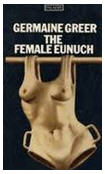
The Female Eunuch – 40 years later

2010 was the 40th anniversary of Germaine Greer’s The Female Eunuch. I decided to use the occasion to re-read the book and write a post about my thoughts. That was in November. The problem is that when I had finished I really wasn’t sure what I wanted to say. In conjunction with the The Female Eunuch I also read An Untamed Shrew, Greer’s unauthorised biography written by Christine Wallace. And of course at the start of the year I read that Louis Nowra piece in The Monthly.

I’ve been perplexed about which approach to take when writing the piece. An encompassing history of what the book means to Australian women? An historical perspective? The book’s flaws? All of these approaches felt too wide, so I have decided to write about my own relationship with the book. Continue reading →

Because I am a Girl

Last week I stumbled across Plan Australia’s Because I am a Girl program. To use their words:

‘Because I am a Girl’ is Plan’s global campaign designed to fight gender inequality, promote girls’ rights and lift millions of girls out of poverty. Across the globe, girls are at the bottom of the social ladder, deprived of the same opportunities as boys. For example,research has shown that girls are more likely to suffer from malnutrition; be forced into an early marriage; be subjected to violence or intimidation; be trafficked, sold or coerced into the sex trade; or become infected with HIV.

Take two minutes to watch this great video:

Here are two facts that motivated me to get involved:

  • Girls are less likely that boys to survive to their first birthday.
  • A woman or girl will reinvest 90% of her income into her family.

The other exciting news I was interested in this week was Kevin Rudd announcing that Australian has pledged $225 million dollars of foreign aid for women and children. This is great news and will be interesting to track how the UN’s  “global strategy for women’s and children’s health” progresses over the next few years.